 GymTrack
Best Hevy Alternatives in 2026 (Tested & Ranked)
October 31, 2026 · 21 min read
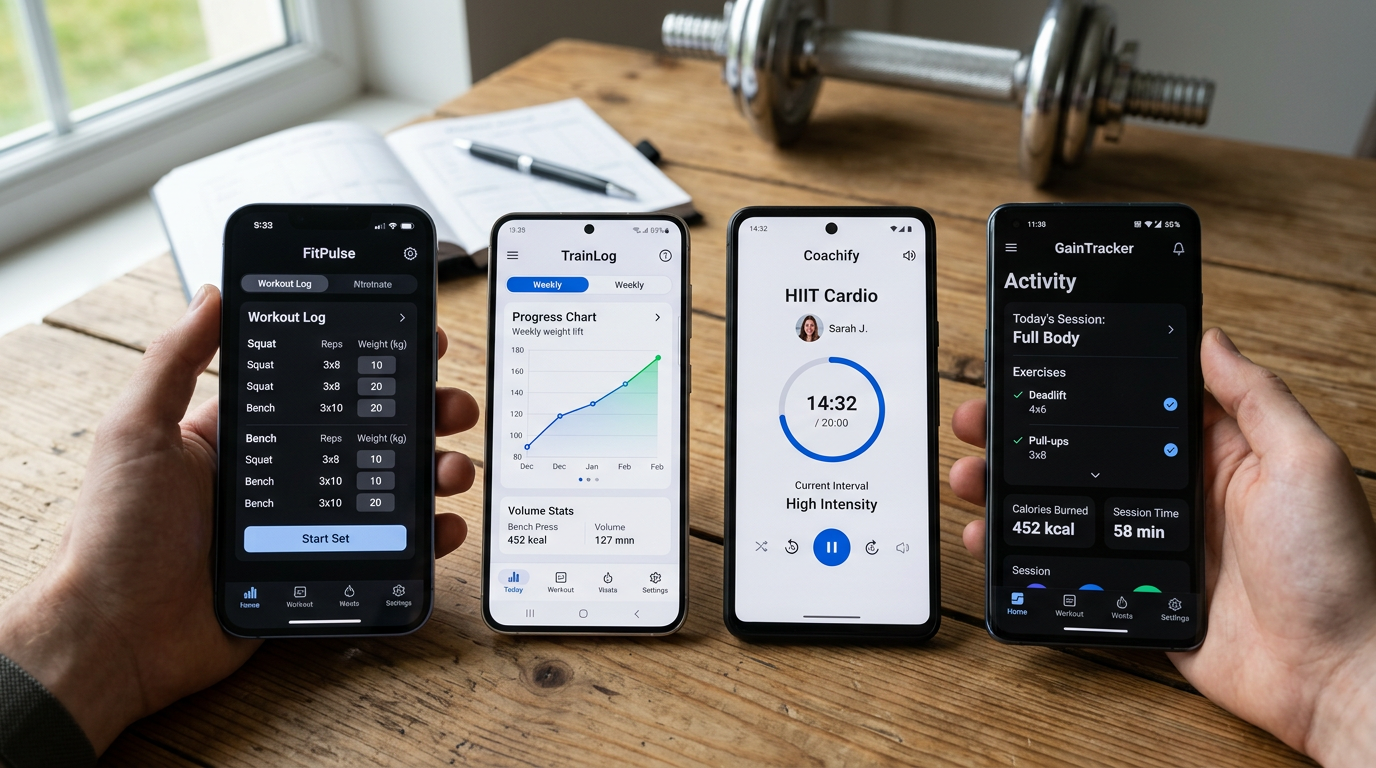
Hevy alternatives are workout tracking apps designed for strength training and progressive overload. The best options include Strong, Boostcamp, Fitbod, StrengthLog, and GymTrack, each offering unique features like program libraries, AI coaching, and detailed analytics for lifters who want more than basic logging.
Hevy has become one of the most popular workout tracking apps for lifters, with its clean interface and social features. But it's not the only option, and depending on what you prioritize in your training, it might not be the best fit.
If you're looking for hevy alternatives, you're probably after something specific: faster logging, better program support, more detailed analytics, or features Hevy doesn't offer. Maybe you want per-set RPE tracking, automatic plate calculations, or an AI coach that actually reads your training history.
I tested 12 workout tracking apps over 8 weeks of training, logging every session to see which ones actually make you faster and more consistent. This guide covers the best Hevy alternatives in 2026, what each does well, and who should use them.
Key Takeaways
- Strong offers the fastest logging for lifters who follow their own programs and want zero friction
- Boostcamp excels at structured programs with the largest free library of proven routines
- GymTrack combines fast logging with AI coaching that analyzes your actual training data
- Free apps like FitNotes and Ellim provide solid tracking without paywalls for basic features
- Choose based on your priority: speed (Strong), programs (Boostcamp), or AI analysis (GymTrack)
Quick Comparison: Best Hevy Alternatives
App
Best For
Price
Key Feature
Platform
Strong
Fast logging
Free/$4.99/mo
Minimal interface
iOS, Android
Boostcamp
Program library
Free
200+ programs
iOS, Android
GymTrack
AI coaching
Free
AI analyzes history
iOS, Android
Fitbod
Auto workouts
$12.99/mo
AI workout builder
iOS, Android
StrengthLog
Powerlifting
Free/$5.99/mo
1RM tracking
iOS, Android
FitNotes
Android users
Free
Offline, no ads
Android only
Ellim
Budget option
Free
No paywall
iOS, Android
JEFIT
Exercise library
Free/$12.99/mo
1,300+ exercises
iOS, Android
Alpha Progression
Volume tracking
$7.99/mo
Detailed analytics
iOS, Android
Liftosaur
Customization
Free
Open source
Web, iOS, Android
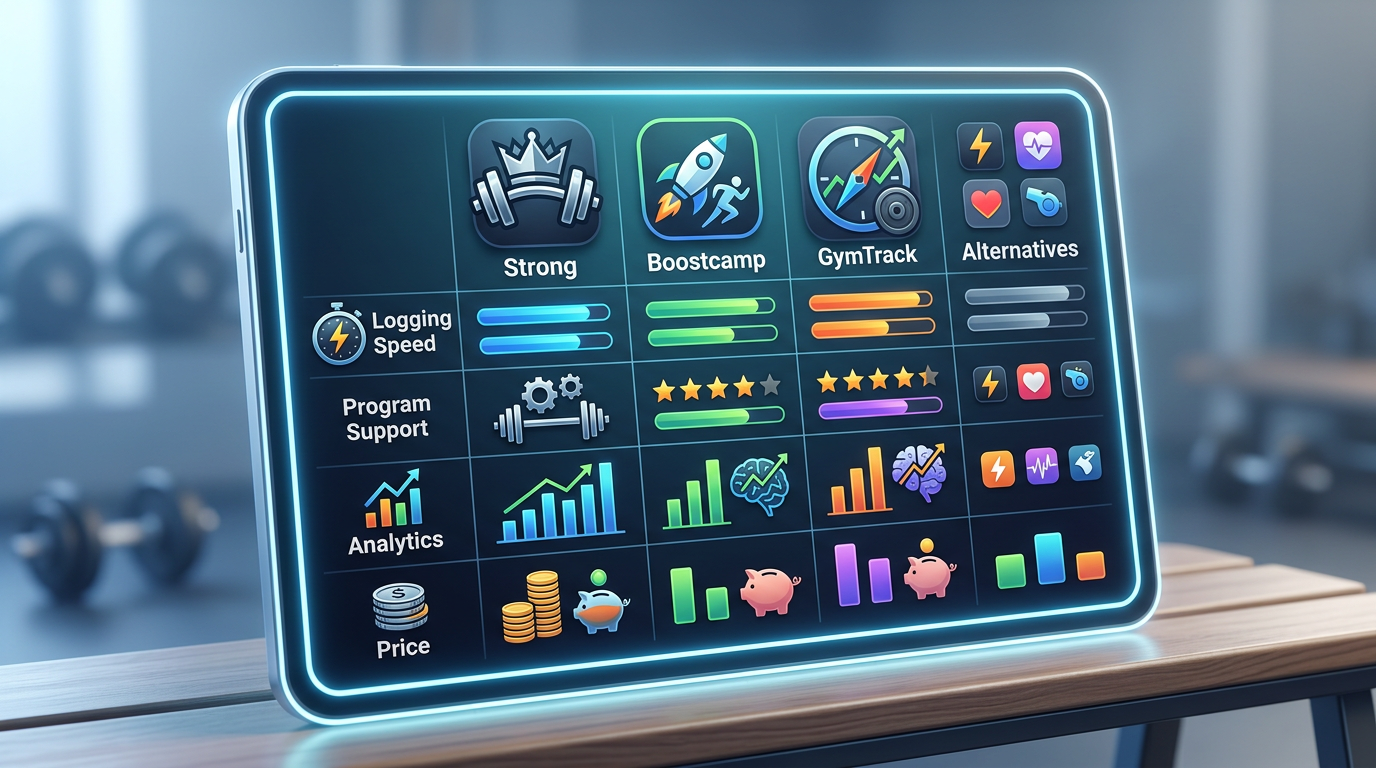
Comparison chart showing Strong, Boostcamp, GymTrack, and other Hevy alternatives with feature ratings for logging speed, program support, analytics, and price
1. Strong: Best for Fast Logging
Strong has been around since 2015 and remains one of the cleanest workout trackers available. The interface is minimal, logging is fast, and it gets out of your way.
The app focuses on speed above everything else. You can log a 5-exercise workout in under 2 minutes once you have your routine set up. No animations, no tips, no social feed. Just your exercises, sets, reps, and weight.
Strong works best if you already know what program you're following and just need to track numbers. It doesn't include built-in programs or coaching. You build your own routines or manually input a program you found elsewhere.
The free version limits you to 3 custom routines. Strong Pro ($4.99/month or $29.99/year) removes that limit and adds plate calculator, rest timer customization, and workout notes. Most serious lifters will hit the 3-routine limit quickly if they run periodized programs.
Pros
- Fastest logging interface among all tested apps
- Clean design with no clutter or unnecessary features
- Automatic rest timer between sets
- PR detection and personal records tracking
- Works offline with full functionality
Cons
- No built-in programs or coaching guidance
- Free version limited to 3 custom routines
- No RPE or RIR tracking options
- Analytics are basic compared to competitors
2. Boostcamp: Best for Program Selection
Boostcamp built its reputation on having the largest library of free strength programs. Over 200 programs from coaches like Greg Nuckols, Jeff Nippard, and Calgary Barbell.
The app is completely free with no premium tier. You get access to every program, full tracking, and progress analytics without paying anything. This makes it the best Hevy alternative for lifters who want to follow proven programs without building their own.
Programs include per-set targets for reps, weight percentages, and RPE when specified by the coach. You're not guessing what to do each session. The app tells you exactly what the program calls for, and you log whether you hit it.
The downside is less flexibility if you want to program hop or modify workouts significantly. Boostcamp is built around following a program as written, not customizing on the fly. You can make small adjustments, but it's not as fluid as Strong or GymTrack for self-programmers.
Pros
- 200+ free programs from respected coaches
- Completely free with no premium upsells
- Per-set targets based on program specifications
- Progress tracking tied to program progression
- Active community and program reviews
Cons
- Less flexible for custom programming
- Interface can feel cluttered with many programs
- No AI coaching or personalized recommendations
- Limited exercise substitution options
3. GymTrack: Best for AI Coaching
GymTrack combines fast logging with an AI coach that actually reads your training history. You can log sets in seconds, track RPE per set, and get automatic PR detection with projected 1RM calculations.
The AI coaching feature analyzes your logged workouts to answer questions about your training. Ask about volume trends, recovery patterns, or exercise selection, and it pulls from your actual data rather than generic advice.
GymTrack is built for lifters who want both speed and depth. You can follow structured programs with per-set targets or build your own workouts. The app includes plate calculator, rest timers, and detailed analytics for volume, frequency, and intensity over time.
Everything is free, including the AI coach, program builder, and analytics. The app focuses on lifters who train 3-6 days per week and want to track progressive overload without switching between multiple tools.
The trade-off is that GymTrack doesn't include a program library like Boostcamp. You need to input your own program or use the builder to create one. If you want pre-made programs, you'll need to look elsewhere or use Boostcamp alongside it.
Pros
- AI coach analyzes your actual training history
- Fast logging with per-set RPE tracking
- Automatic PR detection and 1RM projection
- Free with no paywalled features
- Programs with per-set targets for reps and load
Cons
- No built-in program library
- AI features require consistent logging to be useful
- Newer app with smaller community than Strong or Hevy
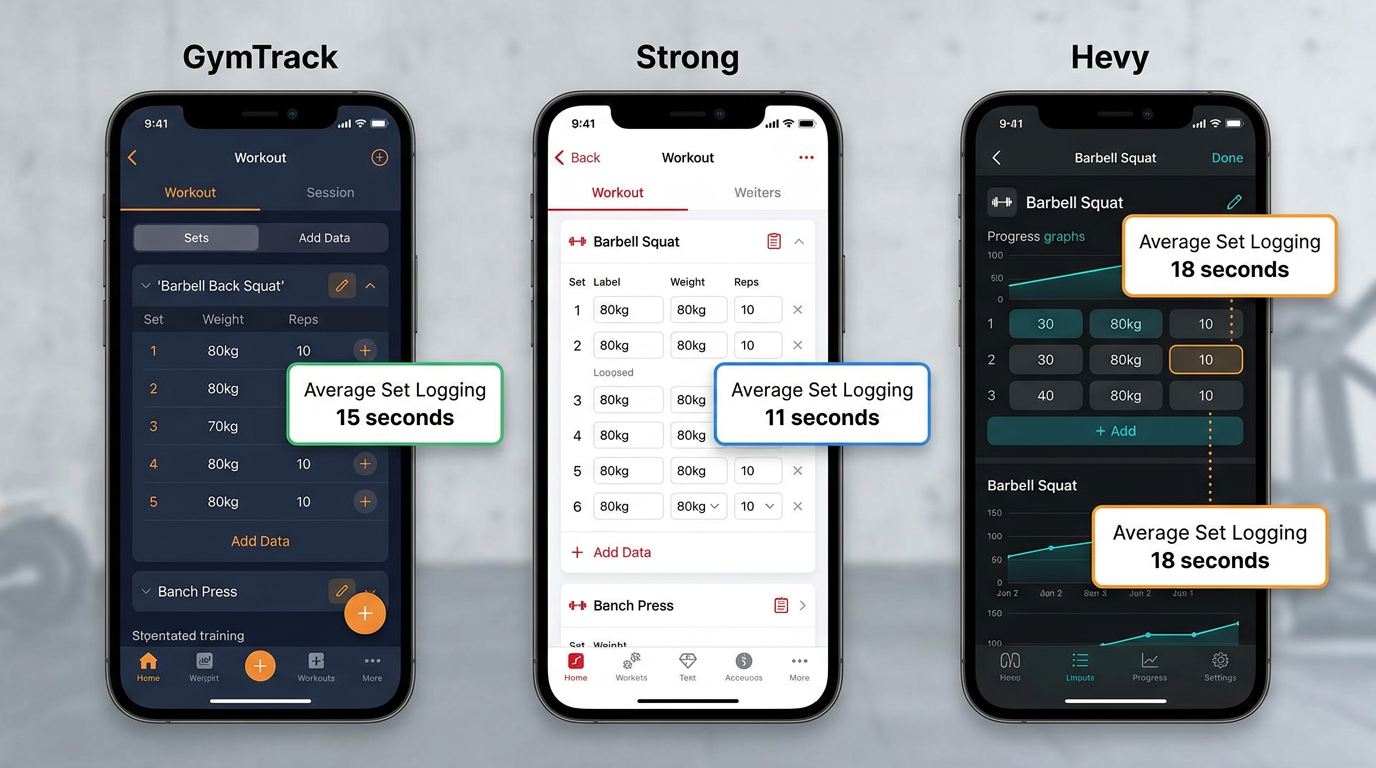
Screenshot comparison showing workout logging interface in GymTrack, Strong, and Hevy side by side with logging speed annotations
4. Fitbod: Best for Auto-Generated Workouts
Fitbod uses AI to generate workouts based on your available equipment, training history, and recovery status. The app decides what exercises to do, how many sets, and what rep ranges.
This works well for lifters who want variety and don't want to plan their own training. Fitbod adjusts recommendations based on what you did recently, avoiding muscle groups that need more recovery time.
The algorithm considers training volume, muscle group balance, and exercise variation. If you hit chest hard two days ago, Fitbod will recommend lighter chest work or skip it entirely in favor of other muscle groups.
Fitbod costs $12.99/month or $79.99/year, making it one of the more expensive options. The free version limits you to 3 workouts total, which isn't enough to evaluate if the programming matches your goals.
The main limitation is lack of control. If you want to follow a specific program like 5/3/1 or a linear progression, Fitbod isn't designed for that. It's built for lifters who want the app to handle programming decisions.
Pros
- AI generates workouts based on recovery and history
- Balances muscle groups automatically
- Large exercise library with video demos
- Adjusts to available equipment
- Good for variety and avoiding plateaus
Cons
- Expensive at $12.99/month
- Less control over specific programming
- Not ideal for following established programs
- Free version limited to 3 workouts
5. StrengthLog: Best for Powerlifting Focus
StrengthLog comes from the team behind Stronger by Science and focuses heavily on tracking 1RM progress across the big lifts. The app includes detailed analytics for squat, bench, deadlift, and overhead press.
The free version offers full workout tracking, 1RM calculations, and basic analytics. StrengthLog Pro ($5.99/month) adds 40+ programs, including several from Greg Nuckols, advanced analytics, and the ability to create custom programs.
The app excels at showing strength trends over time. You can see estimated 1RM progression for any lift, volume per muscle group per week, and how your training compares to previous cycles.
StrengthLog works best for powerlifters and strength-focused lifters. If you care more about bodybuilding or general fitness, the analytics might be overkill. The interface prioritizes strength metrics over aesthetics or conditioning.
Pros
- Excellent 1RM tracking and progression charts
- Programs from Stronger by Science included
- Detailed volume and frequency analytics
- Free version includes full tracking
- Built by lifters for lifters
Cons
- Interface less polished than Strong or Hevy
- Program library requires Pro subscription
- Less focus on bodybuilding or conditioning
- Learning curve for advanced features
6. FitNotes: Best Android-Only Option
FitNotes is a no-nonsense Android app that does one thing well: tracking workouts offline with zero ads and zero upsells. It's completely free and has been since 2013.
The app stores everything locally on your device. No account required, no cloud sync issues, no data sharing. You own your workout data completely.
FitNotes offers detailed analytics despite being free. You get volume tracking, personal records, exercise history graphs, and the ability to export all your data as CSV files.
The interface looks dated compared to modern apps, but functionality is solid. Logging is fast once you set up your routines. The app includes a rest timer, plate calculator, and the ability to track cardio and bodyweight exercises.
The obvious limitation is Android only. There's no iOS version and the developer has stated there are no plans to build one. If you switch to iPhone, you'll need to export your data and move to a different app.
Pros
- Completely free with no ads or premium tier
- Works fully offline with local data storage
- Detailed analytics and exercise history
- Export data as CSV for backup
- Lightweight and fast performance
Cons
- Android only, no iOS version
- Dated interface compared to modern apps
- No cloud sync between devices
- No built-in programs or coaching
7. Ellim: Best Budget Alternative
Ellim positions itself as a free alternative to Strong with no feature paywalls. You get unlimited routines, full analytics, and workout tracking without paying anything.
The app includes exercise library with demos, rest timer, plate calculator, and PR tracking. Everything Strong Pro offers, but free. The catch is fewer users and a smaller community compared to established apps.
Ellim works well for lifters who want Strong's simplicity without the subscription. The interface is clean, logging is straightforward, and you can build custom programs without limitations.
The main downside is less polish and occasional bugs. Ellim is developed by a smaller team, so updates come slower and edge cases might not be handled as smoothly as apps with larger development resources.
Pros
- Completely free with no premium tier
- Unlimited custom routines
- Clean interface similar to Strong
- Full analytics and PR tracking included
- No ads in the free version
Cons
- Smaller user base and community
- Occasional bugs and slower updates
- Less polished than established competitors
- No built-in program library
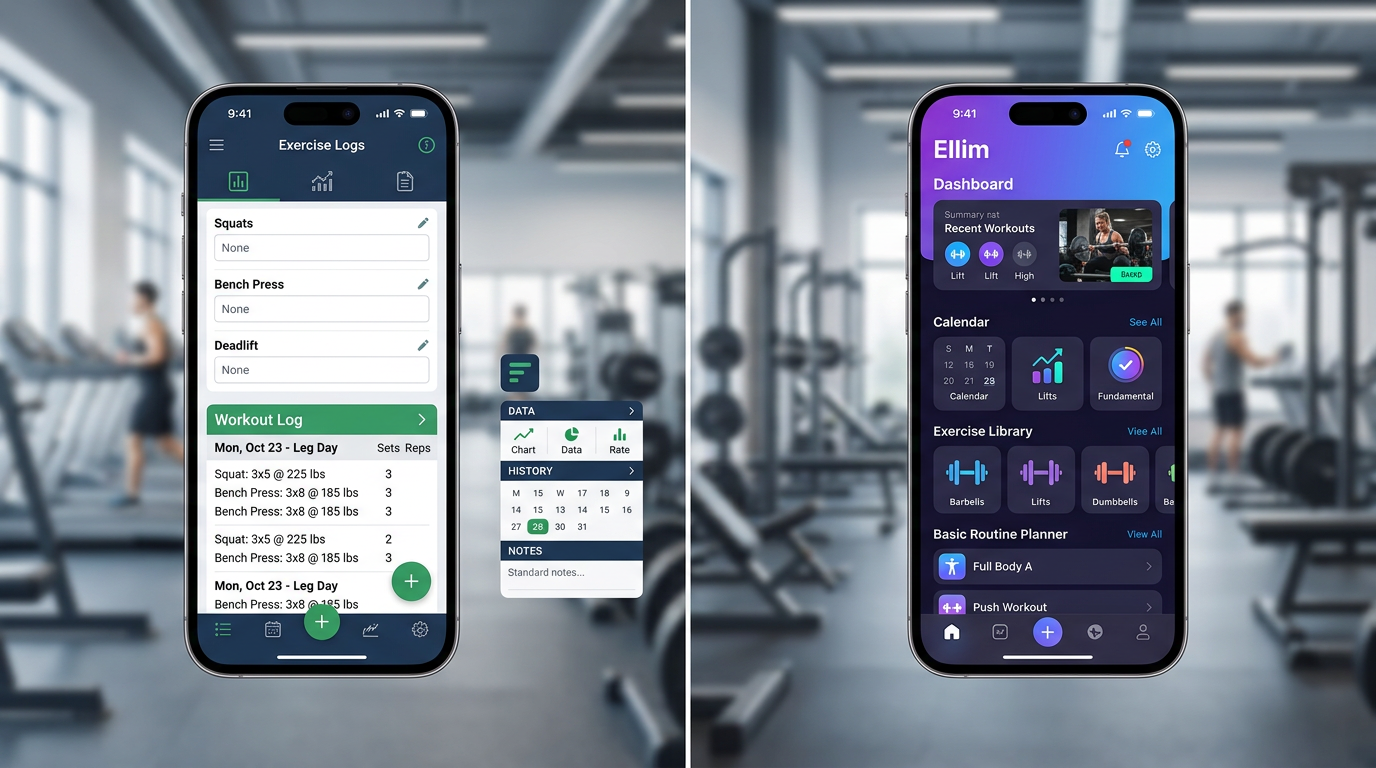
Side-by-side screenshots of FitNotes and Ellim showing their free features compared to paid alternatives
8. JEFIT: Best Exercise Library
JEFIT offers over 1,300 exercises with animations and instructions. The library is the most comprehensive among workout tracking apps, covering every variation of major lifts plus machines, cables, and bodyweight movements.
The free version includes workout tracking, exercise library, and basic analytics. JEFIT Elite ($12.99/month or $69.99/year) adds advanced analytics, program builder, and removes ads.
JEFIT works best for beginners who need exercise guidance or lifters who want detailed instructions for new movements. Each exercise includes muscle group breakdowns, equipment needed, and step-by-step form cues.
The downside is interface clutter. JEFIT tries to be everything: tracker, social network, exercise database, and program library. This makes navigation slower compared to focused apps like Strong or GymTrack.
Pros
- 1,300+ exercises with animations
- Detailed form instructions for each movement
- Free version includes full tracking
- Large community and workout sharing
- Program library with user-created routines
Cons
- Interface feels cluttered and dated
- Ads in free version can be intrusive
- Slower logging compared to minimalist apps
- Elite subscription is expensive for features offered
9. Alpha Progression: Best Volume Analytics
Alpha Progression focuses on tracking training volume and progressive overload with detailed analytics. The app calculates volume per muscle group per week and shows trends over time.
The app costs $7.99/month or $47.99/year with no free tier beyond a 7-day trial. You get workout tracking, volume analytics, exercise recommendations, and deload week suggestions based on accumulated fatigue.
Alpha Progression excels at showing whether you're actually progressing or spinning your wheels. The app tracks volume load (sets × reps × weight) and highlights when you're not adding volume or intensity over time.
This level of detail appeals to intermediate and advanced lifters who understand periodization and want data-driven training decisions. Beginners might find the analytics overwhelming or unnecessary.
Pros
- Detailed volume tracking per muscle group
- Progressive overload analytics and recommendations
- Deload suggestions based on fatigue indicators
- Clean interface focused on data
- Exercise recommendations for weak points
Cons
- No free version, only 7-day trial
- $7.99/month is steep for tracking features
- Analytics can overwhelm beginners
- No built-in program library
10. Liftosaur: Best for Customization
Liftosaur is an open-source workout tracker that lets you customize everything. You can create programs with complex progression schemes, conditional logic, and custom formulas.
The app is completely free and works on web, iOS, and Android. Your data syncs across devices, and you can export everything as JSON files for complete ownership.
Liftosaur appeals to programmers and lifters who want complete control over progression logic. You can build programs that adjust weights based on performance, auto-regulate volume, or implement custom periodization schemes.
The learning curve is steep. If you want to use advanced features, you'll need to understand the scripting language Liftosaur uses for program logic. For basic tracking, the app works fine, but you're not using its main advantage.
Pros
- Completely free and open source
- Unlimited customization with scripting
- Works on web, iOS, and Android
- Full data export and ownership
- Active development and community
Cons
- Steep learning curve for advanced features
- Interface less polished than commercial apps
- Requires programming knowledge for complex programs
- Smaller user base for support
Which Hevy Alternative Is Best For You?
The best Hevy alternative depends on what you prioritize in your training and what features you actually use.
Choose Strong if:
- You want the fastest logging experience with minimal friction
- You already know what program you're following
- You don't need coaching or built-in programs
- Clean interface matters more than advanced analytics
Choose Boostcamp if:
- You want to follow proven programs from respected coaches
- You prefer structure over building your own workouts
- Free access to 200+ programs is more valuable than customization
- You're okay with less flexibility for off-program training
Choose GymTrack if:
- You want AI coaching that analyzes your actual training data
- Fast logging with per-set RPE tracking is important
- You follow structured programs with per-set targets
- You want automatic PR detection and 1RM projections
Choose Fitbod if:
- You want the app to generate workouts for you
- Variety and auto-regulation matter more than specific programs
- You're willing to pay $12.99/month for convenience
- You don't want to think about programming decisions
Choose StrengthLog if:
- Powerlifting and 1RM progression are your primary focus
- You want programs from Stronger by Science
- Detailed strength analytics matter more than general fitness tracking
- You're comfortable with a less polished interface
Choose FitNotes if:
- You use Android and want completely free tracking
- Offline functionality and data ownership are priorities
- You don't need cloud sync or iOS compatibility
- You prefer function over modern design
Choose Ellim if:
- You want Strong's features without the subscription
- Budget is a primary concern
- You can tolerate occasional bugs for free unlimited features
- You don't need a large community or social features
Choose JEFIT if:
- You need extensive exercise library with form instructions
- You're a beginner learning new movements
- Community features and workout sharing appeal to you
- You can navigate a cluttered interface for comprehensive features
What Makes a Good Workout Tracking App
After testing these hevy alternatives across 8 weeks of training, several factors separate good apps from frustrating ones.
Logging Speed
The best apps let you log a set in under 5 seconds. Tap exercise, enter weight and reps, done. No animations, no confirmation screens, no unnecessary steps.
Strong and GymTrack excel here. You can complete a 5-exercise workout with 15 sets in under 2 minutes of logging time. Hevy, Fitbod, and JEFIT add friction with extra screens and social features that slow you down.
Progressive Overload Tracking
The app should make it obvious whether you're getting stronger. PR detection, volume trends, and 1RM estimates help you see progress beyond just looking at individual workout logs.
StrengthLog and Alpha Progression provide the most detailed analytics. GymTrack and Strong offer solid tracking without overwhelming you with data. Boostcamp ties progress to program completion rather than individual lift metrics.
Program Support
If you follow structured programs, you need per-set targets, not just exercise names. The app should tell you what weight, reps, and RPE the program calls for each set.
Boostcamp handles this best with its program library. GymTrack lets you build programs with per-set targets. Strong and Hevy require manual notes or memory to know what you're supposed to hit.
Price vs Value
Free apps like Boostcamp, GymTrack, FitNotes, and Ellim offer full functionality without paywalls. Strong and StrengthLog have reasonable paid tiers at $5-6/month. Fitbod and JEFIT Elite at $12.99/month are harder to justify when free alternatives exist.
Common Mistakes When Switching Apps
Lifters make several errors when moving from Hevy to a different app that hurt their training continuity.
Not Exporting Historical Data
Most apps let you export workout history as CSV files. Do this before fully committing to a new app. You lose years of training data if you switch without backing up.
Strong, GymTrack, and FitNotes all support CSV imports, so you can bring your history forward. Boostcamp doesn't import external data since it's program-focused.
Choosing Based on Features You Won't Use
An app with 50 features you'll never touch is worse than one with 10 features you use daily. JEFIT's massive exercise library doesn't help if you only do the same 15 exercises every week.
Pick based on your actual training style. If you run 5/3/1, you need program support. If you do your own thing, you need fast logging and good analytics. If you want guidance, you need AI coaching or a program library.
Not Testing During a Real Training Week
Most apps offer free trials or free versions. Use them during actual training sessions, not just clicking around at home. You'll discover friction points quickly when you're between sets and want to log fast.
Test logging speed, rest timer functionality, and whether you can see your previous sets easily. These matter more than features you evaluate in demo mode.
Frequently Asked Questions
What is the best free alternative to Hevy?
Boostcamp and GymTrack are the best free Hevy alternatives. Boostcamp offers 200+ programs from respected coaches with no premium tier. GymTrack provides AI coaching, fast logging, and automatic PR detection completely free. FitNotes works well for Android users who want offline tracking without ads or subscriptions.
Can I import my Hevy workout history to other apps?
Most apps accept CSV imports of workout data. Export your Hevy history as CSV, then import to Strong, GymTrack, or FitNotes. Boostcamp doesn't support imports since it focuses on following specific programs. You may need to format the CSV to match the target app's expected columns for exercises, sets, reps, and weight.
Which workout app has the fastest logging?
Strong and GymTrack offer the fastest logging among tested apps. Both let you log a set in under 5 seconds with minimal taps. Strong's interface is slightly cleaner with fewer features, while GymTrack adds per-set RPE tracking without slowing down the process. Hevy and Fitbod add extra screens that increase logging time.
Do I need a paid app to track workouts effectively?
No, free apps like Boostcamp, GymTrack, and FitNotes provide complete workout tracking without paywalls. They include PR detection, analytics, and program support. Paid apps like Strong Pro and StrengthLog Pro add convenience features like unlimited routines and advanced analytics, but free versions work fine for most lifters who train consistently.
What's the difference between Hevy and Strong?
Strong focuses on minimal, fast logging for lifters who follow their own programs. Hevy adds social features, exercise videos, and a more visual interface. Strong is faster for logging but limits free users to 3 routines. Hevy offers more features in the free version but takes longer to log sets due to additional screens and social elements.
Which app is best for following powerlifting programs?
Boostcamp and StrengthLog work best for powerlifting programs. Boostcamp includes programs like Calgary Barbell 16 Week and 5/3/1 variations with per-set targets. StrengthLog offers Stronger by Science programs and detailed 1RM tracking for squat, bench, and deadlift. Both handle percentage-based programming better than general tracking apps like Strong or Hevy.
Can workout apps replace a coach?
Apps provide tracking, analytics, and program guidance but can't replace personalized coaching for form checks, injury management, or custom programming. GymTrack's AI coach analyzes your training history for insights. Fitbod generates workouts based on recovery. However, neither replaces a coach who watches your lifts and adjusts programming to your specific needs and limitations.
Conclusion
The best hevy alternatives in 2026 depend on your training style and priorities. Strong offers the fastest logging for self-programmers. Boostcamp provides 200+ free programs from respected coaches. GymTrack combines fast logging with AI coaching that analyzes your actual training data.
For most lifters, Boostcamp works best if you follow structured programs, GymTrack if you want AI analysis with fast logging, and Strong if you prioritize speed above everything else. All three offer better value than Hevy for specific use cases.
Test apps during real training sessions to see what actually fits your workflow between sets.
Log your next session in GymTrack
Fast set logging, automatic PRs, programs with per-set targets and an AI coach that reads your history. Free on iPhone and Android.
Get the app